Andre Gharagozian
Project Manager

August 5, 2026



More stringent effluent requirements, the need to expand capacity, or the desire to reduce power and O&M costs are driving utilities to consider wastewater process intensification strategies. Intensification can optimize process performance by increasing capacity, improving effluent quality, and providing more cost-effective upgrades and greater operational control—all within a smaller footprint.
Successfully implementing these emerging technologies requires a risk-mitigation-based design approach that carefully integrates new systems into existing plants while managing technical, operational, and financial uncertainties. Carollo’s Emerging Technology Design Integration Team (ETDIT) uses this approach and incorporates lessons learned from operating facilities to integrate new technologies into existing plants.
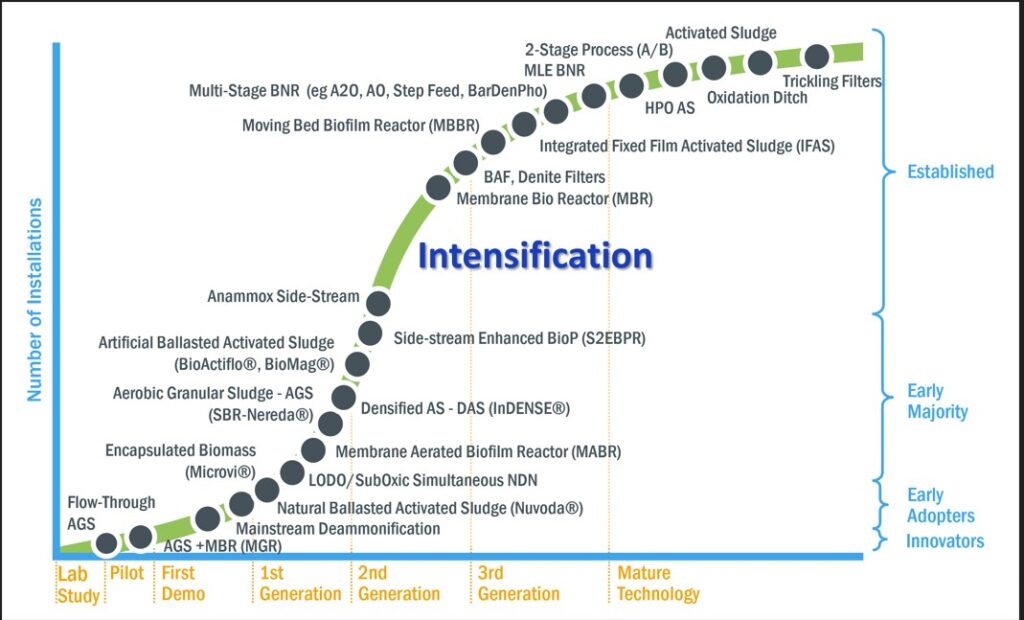
Several emerging technologies offer the potential to enhance or intensify activated sludge (AS) processes. In most AS systems, the limiting factor is usually the ability to separate solids downstream of a reactor.
Densified activated sludge (DAS) selects for heavier, better settling floc by washing away lighter, less desirable biomass. It can be achieved through biological or physical selection using cyclones or sieves. This allows operation at higher mixed liquor suspended solids (MLSS) concentrations, translating to more treatment capacity.
Ballasted activated sludge (BioMag®) uses magnetite as a ballast to increase floc density and enhance the settling rate of mixed liquor in an AS process. The magnetite ballast material is recovered to use again. Similar to
DAS, the improved settleability allows operation at higher MLSS concentrations.
Membrane bioreactors (MBRs) separate solids and liquids using a membrane rather than gravity—resulting in 100 percent solids removal and ultra clean effluent. Eliminating gravity settling allows higher MLSS concentrations in the aeration basins and reduces the process footprint.
Integrated fixed-film activated sludge (IFAS) is a hybrid fixed-film and suspended growth AS process. The fixed-film media provides a surface to grow biofilm and increases the biomass in the aerobic zone of a reactor. IFAS provides the most benefit in cold temperatures. Since the biofilm removes some of the nutrient loads, the suspended growth AS process can be downsized for lower loads.
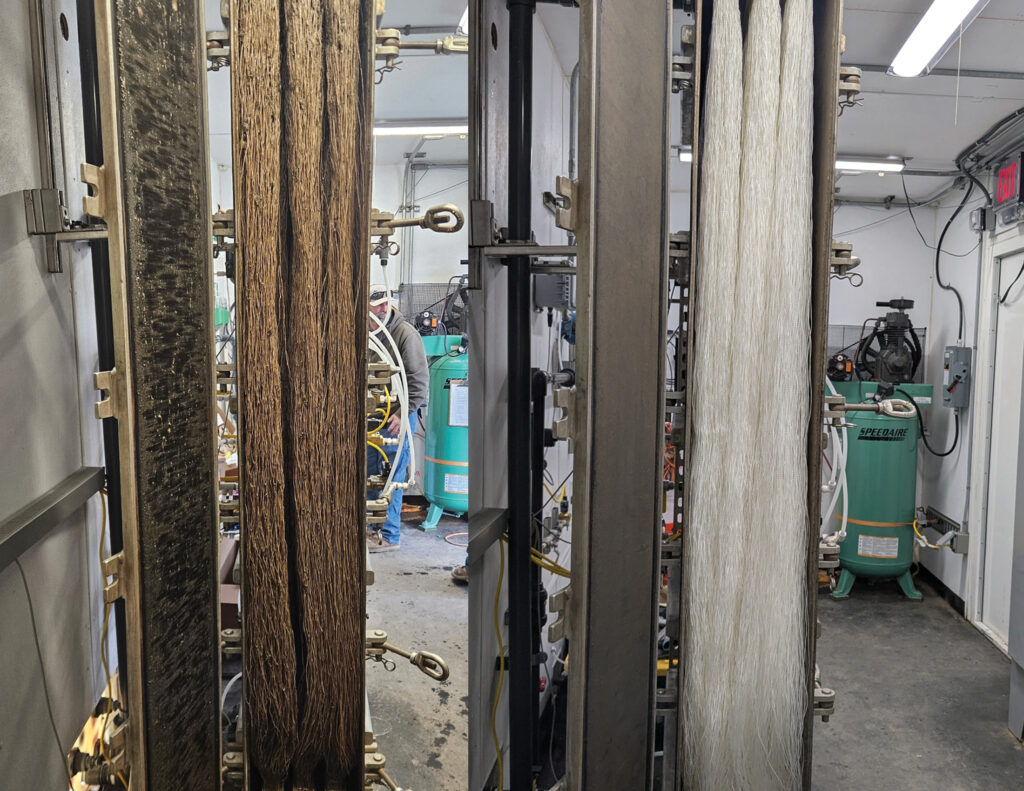
Membrane aerated bioreactors (MABRs) are a newer hybrid process. MABRs are unique in how membranes supply oxygen and provide a surface for biofilm to grow, which typically removes 30 to 40 percent of the nitrogen.
Anammox sidestream treatment selects for anaerobic ammonia oxidizing bacteria combined with shortcut nitrification, reducing air and chemical requirements. Anammox processes don’t use carbon for nitrogen removal, so they’re well-suited for plants that must meet very low limits. While most often used for sidestream treatment, these processes are now beginning to see applications for mainstream treatment.
Aerobic granular sludge (AGS) selects for large, rapidly-settling granules containing all microbial cultures required for nitrification, denitrification, and phosphorus removal. The feast-famine conditions created in a sequencing batch reactor configuration, as well as selective wasting of flocculent biomass, encourages granule formation.
Driven by growing demands for efficiency, sustainability, and innovation, the evolution of process intensification relies on creative applications of novel treatment enhancement strategies. New developments in AI and automation will only spur this momentum. But it’s important to remember that technology is only half of the equation.
The value of merging science with human creativity, resourcefulness, and a natural drive to remain competitive in a dynamic industry cannot be overstated. At Carollo, our experts in process intensification are working with several technology providers to investigate strategies that optimize, integrate, and enhance these intensification methods. We invite you to reach out to us to discuss solutions customized to meet your specific needs.
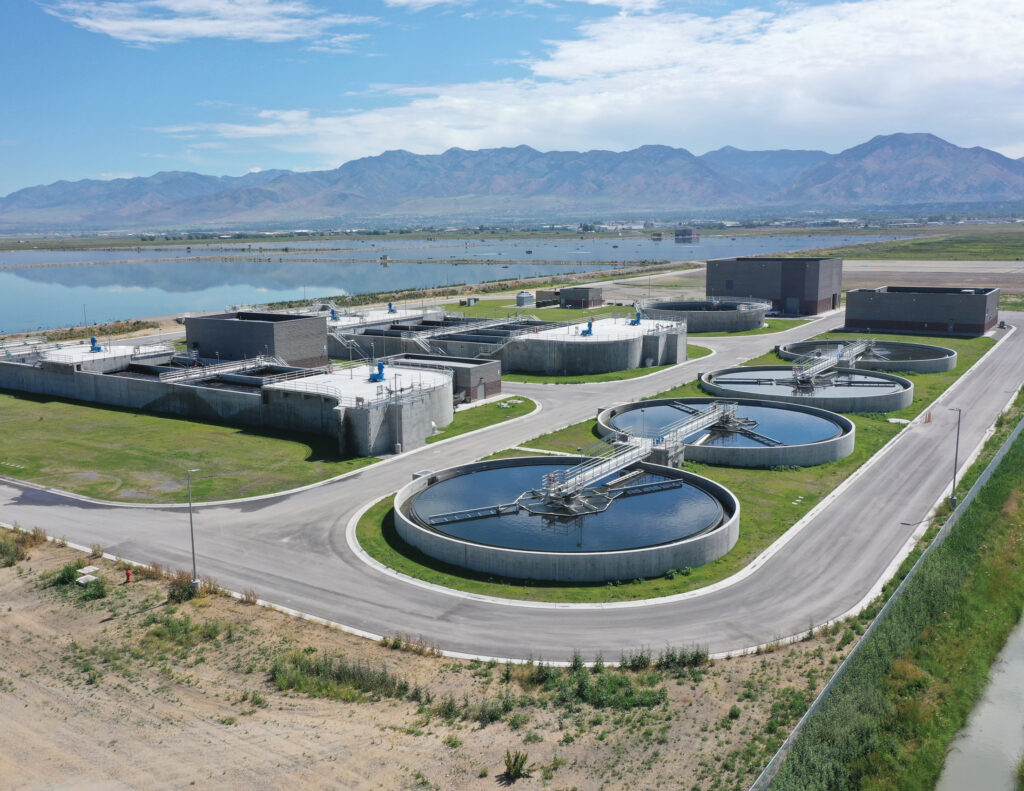
Logan, Utah
Carollo master planned and designed the largest municipal ballasted AS facility in the world in Logan, Utah. The new $135 million wastewater treatment facility (WWTF) achieves average effluent total phosphorus and total nitrogen concentrations of
0.2 and 3.3 mg/L, respectively. Using BioMag® instead of conventional AS reduced the size of new aeration tanks and secondary clarifiers, saving the city approximately $40 million in construction.
Klamath Falls, Oregon
Carollo is completing design-build delivery of Klamath Falls’ replacement of aging facilities and process improvements to reduce nutrient loads to Lake Ewauna from the Spring Street Sewage Treatment Plant. Work includes optimizing MABR configurations with piloting and modeling to meet stringent ammonia and phosphorus limits in cold weather.
Kimberley, British Columbia
The City of Kimberley is using integrated project delivery to upgrade its WWTF. Following technology evaluations and potential site reviews, AGS surpassed expectations as the most feasible and cost-effective technology to optimize nutrient removal at the existing plant site.