Megan Rucker
Staff Professional

When I entered college, I wasn’t sure what career path I wanted, but I knew I loved math, science, and the environment. I declared Chemical Engineering after my freshman year, still exploring options. My first real exposure to the water industry came when Carollo visited Oregon State University for an engineering club event. Learning about how drinking water and wastewater systems work, things we rely on every day without thinking, sparked my curiosity and led me to apply for the internship.
In the weeks before I heard back, I couldn’t stop replaying the conversations that had sparked my excitement about the water industry. The more I read, the more I realized that water touches every process in life, quietly powering everything from daily routines to the systems that keep communities running. I found myself digging deeper, researching my hometown’s drinking water and wastewater facilities, and thinking back to my freshman year engineering courses taught by an environmental engineer who made the field feel both urgent and inspiring. So, when the call finally came on March 17th, a little extra luck on St. Patrick’s Day, I felt genuinely fortunate and excited for the summer ahead.
During my summer internship at Carollo, I worked on a variety of projects, from public utility planning to process modeling for the private sector group. With so much new information coming to me at once, I was definitely a little nervous and overwhelmed, but also eager to soak up as much as I could (pun fully intended). I built my own reference sheet of abbreviations, units, compounds, and treatment methods, which I still use today. I also dove into Carollo Tech Talks on topics such as sustainability, water reuse, and PFAS, trying to absorb as many perspectives as I could.
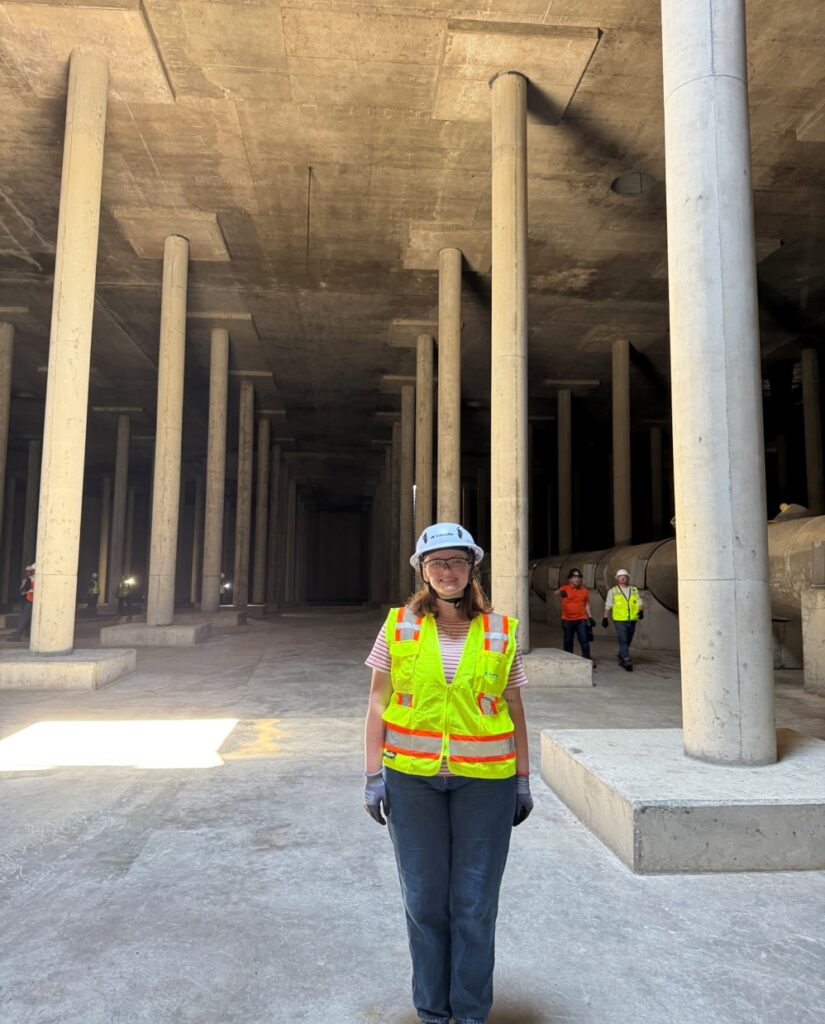
One of my favorite experiences was visiting the Klamath Falls Wastewater Treatment Plant, my first time setting foot on a WWTP site. I was a little intimidated walking in, unsure of what to expect, but interacting with the operators quickly put me at ease. I helped develop a phosphorus profile, which pushed me to learn the facility’s layout and treatment processes and gave me a framework I could apply to other WWTPs later in the summer. I also collected samples for their pilot MABR system, which helped me understand how emerging technologies are tested and evaluated in real-world conditions. It was the first time I truly saw how government regulations and permits shape both daily operations and long-term project planning. That mix of curiosity, slight overwhelm, and excitement made the visit feel like a turning point.
Touring Portland’s Columbia Boulevard WWTP later in the summer was eye-opening in a completely different way. Moving from a 2 MGD facility to a 70 MGD one made the scale of municipal infrastructure feel real. It was exciting to watch how city engineers and consulting engineers collaborated during walkthroughs, asking questions, flagging issues, and refining designs together. Seeing how much communication happens behind the scenes, from in-person discussions to document revisions, helped me understand what effective coordination looks like on large public projects. It was one of those moments where I felt myself connecting the dots between classroom concepts and real-world engineering.
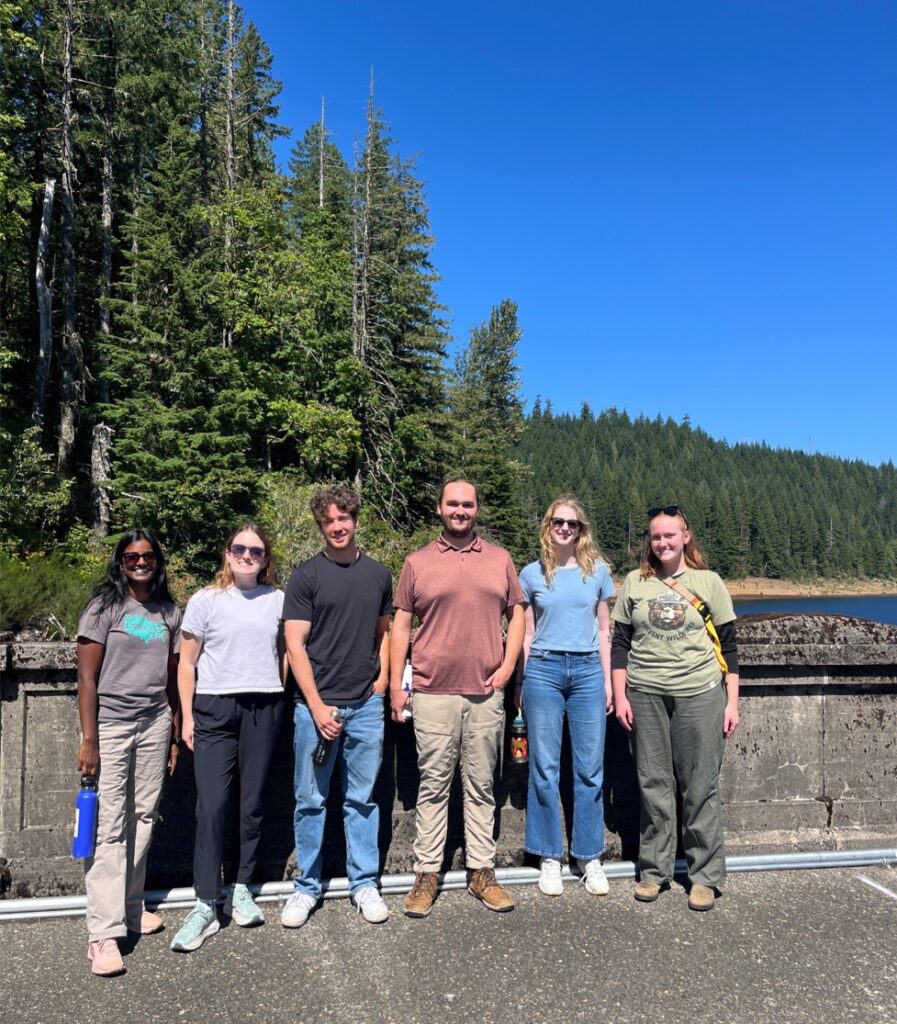
Visiting the Bull Run Watershed was another highlight, adding a completely different dimension to my understanding of Portland’s drinking water system. Learning the history of how the land was protected made me appreciate the stewardship behind a resource most people rarely think about. I remember feeling both grounded and inspired as I realized how important public education and awareness are, knowing where our water comes from and why it matters. The tour also gave me insight into how wildfires affect water sources and how the team had to plan and adapt when a fire broke out in the watershed in 2023. It was a powerful reminder of how dynamic and vulnerable our water systems can be, and how much thoughtful planning goes into keeping them resilient.
During my time in the office, I thoroughly enjoyed applying my chemical engineering coursework to real process modeling projects. I drafted process flow diagrams for ion exchange and solids dewatering, built PipeFlo models for pump stations and heat exchangers, and developed an OLI model for ion exchange. With each project, I felt that familiar mix of challenge and excitement, the same feeling I had in one of my fall engineering courses following the internship, where we had to design an industrial ion exchange system for treating well water. I was probably the most enthusiastic student in the room, thrilled to open Bluebeam again and build a PFD from scratch. Getting to do that work in a professional setting made everything click in a new way.
Throughout the summer, I delved deeper into topics such as PFAS (highly recommend Exposure by Robert Bilott), direct potable reuse, and climate-resilient infrastructure. My experience at Carollo has shaped how I see the world. I now notice water use, treatment, and regulations everywhere I go. As Jude Grounds likes to say, I’ve become a true water nerd.
I graduate in June and will return in August as a full-time engineer. Over the past year, I’ve realized I’m drawn to water because it connects to many things I care about: the environment and the natural world, sustainability, and the responsibility of ethical engineering. Water sits at the intersection of it all. I’m excited to keep learning and contribute to work that truly matters, because everything depends on water.