New study tests powdered activated carbon for PFAS removal in wastewater effluent
WRF project to deliver guidance for utilities considering powdered activated carbon for near-term PFAS treatment
Release Date: June 30, 2026

Release Date: June 30, 2026
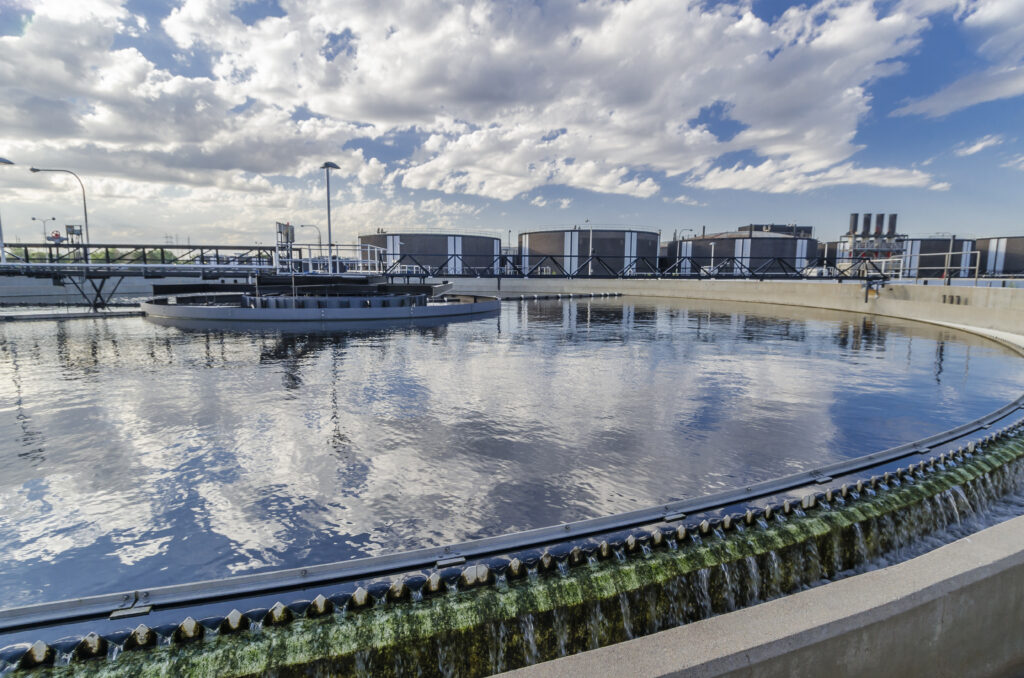
WALNUT CREEK, Calif., June 30, 2026 – A study is underway to evaluate powdered activated carbon (PAC), a sorbent used to adsorb contaminants, as a cost-effective solution for removing per- and polyfluoroalkyl substances (PFAS) from treated wastewater effluent. Led by Carollo Engineers, The Water Research Foundation (WRF) project 5388, Efficacy for PAC for PFAS Removal in Wastewater Effluent, will generate data and decision-support tools to help water resource recovery facilities (WRRFs) assess PAC as a near-term treatment option as PFAS regulations continue to evolve.
PFAS, often referred to as “forever chemicals,” are receiving heightened scrutiny due to their persistence in the environment and the associated removal costs. WRRFs are passive receivers of PFAS as these chemicals enter wastewater streams from residential and industrial discharges. While many PFAS treatment evaluations have focused on drinking water and reuse applications, the more complex chemical matrix in wastewater effluent, including organic matter, solids, and competing compounds, can reduce adsorption performance and complicate implementation.
Supported by several participating utilities and university partners, the 16-month study will help utilities better understand PAC performance in wastewater conditions and what it could take, both operationally and financially, to use PAC for PFAS effluent polishing.
The project’s goals are to generate wastewater-specific PAC feasibility data across multiple facilities, provide infrastructure and cost guidance for PAC dosing in secondary and tertiary treatment, and identify the next research and scale-up steps needed for broader implementation. It will also equip WRRFs, engineers, and regulators with tools to evaluate technical, logistical, and economic feasibility across scales and regions.
The study will include a literature review and bench-scale jar testing using wastewater samples from a diverse set of participating utilities in the United States and Canada. Jar testing will evaluate multiple PAC products across a range of doses for removal before and after secondary and tertiary treatment. Testing will be conducted through a combination of utility in-house capabilities and Carollo’s Water Applied Research Center (Water ARC®).
Michelle Young, senior wastewater technologist at Carollo and principal investigator for the project, said:
“Utilities need defensible, wastewater-specific information to evaluate near-term PFAS treatment options. This project will help WRRFs identify optimal PAC application points and clarify the remaining implementation questions around dosing, timing, and cost that need answers before moving to pilot or full-scale. By leveraging Water ARC®’s applied research capabilities, the project team will deliver reliable performance data alongside practical guidance, helping utilities move from ‘can it work?’ to ‘how would we implement it?’ with greater speed and confidence.”
Upon completion, the project team will deliver a final guidance report, a fact sheet, and a cost and performance estimating tool. Study findings will be shared through a WRF webcast and industry conference presentations.
###
Media Contact:
Cameron McWilliam
Senior Public Relations Manager // Carollo
[email protected]