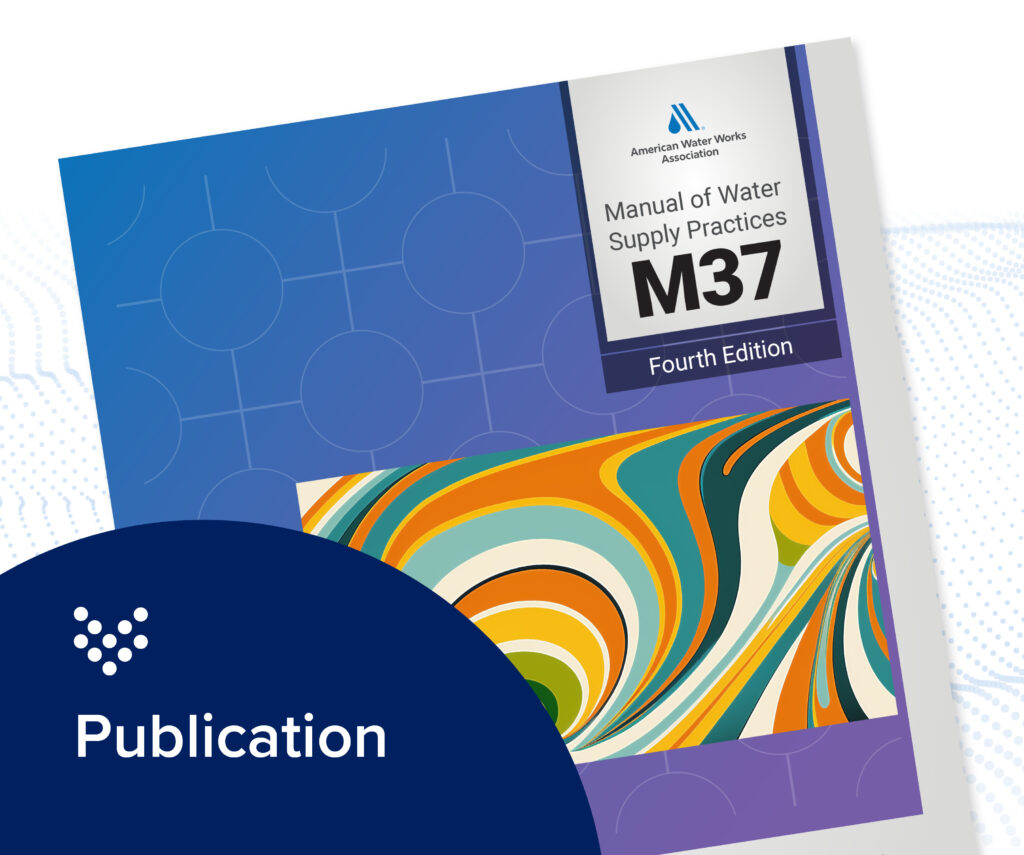
AWWA M1 Manual: Principles of water rates fees and charges
Authors: Jennifer Ivey, Mark Panny

Authors: Jennifer Ivey, Mark Panny
Water rate design sits at the center of how utilities balance financial stability, equity, and long-term resource management. As systems face increasing pressure from growth, climate variability, and evolving customer expectations, the need for clear, data-driven rate structures continues to grow.
The newly released 8th edition of the American Water Works Association (AWWA) M1 Manual Principles of Water Rates Fees and Charges provides updated guidance to help utilities navigate these challenges. Two Carollo experts contributed to this latest edition, helping shape how the industry approaches cost allocation, conservation-oriented pricing, and data analysis.
A core principle of water rate design is aligning costs with how customers use the system. In Chapter 8, Carollo’s Jennifer Ivey led the discussion on allocating revenue requirements to cost components, focusing on cost-of-service methodologies that support equitable rate structures.
The process begins by breaking down overall system costs into functional components such as supply, treatment, and distribution, then allocating those costs based on demand characteristics. This structured approach allows utilities to better understand how different customer classes contribute to system use and to design rates that reflect those differences more accurately.
By strengthening this connection between costs and usage, utilities can improve transparency and build more equitable pricing frameworks.
Jennifer is joined by Carollo’s Mark Panny in Chapter 13, which explores increasing block rates as a tool for managing demand and encouraging conservation.
These rate structures increase the cost of water as usage rises, sending a stronger price signal to customers while maintaining affordability for essential use. When designed effectively, increasing block rates can help utilities address capacity constraints, reduce peak demand, and support long-term resource planning.
Chapter 15, co-authored by Mark, expands on this concept through water budget rates, which tailor usage thresholds to individual customer needs. By defining what constitutes “acceptable” use for each customer, utilities can promote conservation while maintaining fairness across different usage patterns.
Appendices authored by Mark Panny further highlight the importance of data in modern rate design. Appendix B outlines methods for developing customer class peaking factors, which play a key role in allocating system costs. Appendix D explores bill tabulation techniques, which help utilities analyze usage patterns and evaluate how rate structures perform in practice.
Together, these approaches reinforce a central theme of the updated manual: effective rate design depends on accurate data, thoughtful analysis, and a clear understanding of customer behavior.
The latest edition of the AWWA M1 Manual reflects how water rate design continues to evolve alongside industry challenges. From improving cost-of-service methodologies to advancing conservation-oriented pricing, the guidance in this manual helps utilities build rate structures that are both equitable and adaptable.
Carollo’s contributions to this edition underscore the importance of combining technical expertise with practical application to support utilities in making informed, defensible decisions.
To learn more about the updated guidance and explore the full manual, read the complete publication.
Citations
Ivey, Jennifer, and Mark Panny. Principles of Water Rates Fees and Charges. American Water Works Association, Mar. 2026.