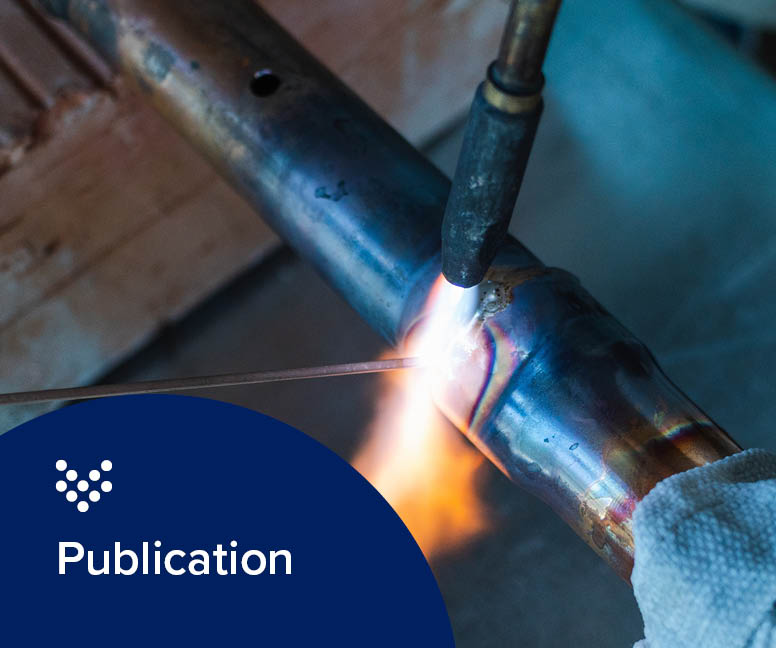
Stainless steel corrosion and prevention in treatment facilities
Authors: Tag Weber
Rocky Mountain Water

Authors: Tag Weber
Rocky Mountain Water
Stainless steel is widely used throughout water and wastewater treatment plants because of its strength, durability, and resistance to corrosion. From tanks and piping to pumps and process equipment, it’s often the material of choice for facilities operating in harsh environments.
But “stainless” doesn’t mean “corrosion-proof.”
A recent article published in Rocky Mountain Water, “Stainless, Not Pain-Less: Tackling Corrosion in Treatment Facilities,” by Carollo’s Tag Weber explores three of the most common ways stainless steel can deteriorate in water and wastewater facilities, as well as the practical steps utilities can take to extend the life of their equipment.
While stainless steel naturally forms a protective oxide layer that resists corrosion, certain operating conditions can damage that barrier. According to Tag, three corrosion mechanisms are particularly common in treatment facilities: chloride-induced pitting, galvanic corrosion, and microbiologically induced corrosion (MIC).
Each affects equipment differently, but all have the potential to reduce reliability, increase maintenance costs, and shorten asset life if left unaddressed.
Chlorides are present in many water systems, whether from naturally occurring salts, treatment chemicals, fertilizers, road deicing salts, or seawater in desalination facilities. Over time, chlorides can break down the protective surface of stainless steel, creating small pits that continue to grow and eventually penetrate the metal.
The article explains that selecting the appropriate stainless steel alloy is one of the most effective ways to reduce this risk. Higher-performance alloys offer greater resistance to chloride exposure, although factors such as water chemistry, temperature, and cost must also be considered during design.
Galvanic corrosion occurs when two dissimilar metals come into contact in the presence of moisture or water. The more active metal corrodes first, sometimes much faster than expected. Simple design choices, such as isolating dissimilar metals or selecting compatible materials, can significantly reduce this risk.
MIC presents a different challenge. Certain microorganisms form biofilms that attack the protective surface of stainless steel, particularly in stagnant water or areas where sediment accumulates. Because MIC often develops in hidden locations such as crevices, welds, and dead-end piping, it can be difficult to detect before damage occurs.
The article emphasizes that good hydraulic design, routine flushing, proper drainage, and minimizing stagnant conditions are among the best defenses against MIC.
Corrosion rarely results from a single cause. More often, multiple mechanisms work together over time to damage equipment. That’s why early detection, routine inspections, and proper installation practices are essential components of long-term asset management.
As Tag explains, proactive maintenance not only helps protect critical infrastructure but also reduces downtime, avoids premature equipment replacement, and lowers long-term operating costs.
Read the full article in Rocky Mountain Water to learn more about common stainless steel corrosion mechanisms and practical strategies for protecting water and wastewater treatment facilities.
Citations
Weber, Tag. “Stainless, Not Pain-Less: Tackling Corrosion in Treatment Facilities.” Rockey Mountain Water Magazine, vol. 58, no. 96, June 2026, pp. 17–21.