Jim Hagstrom
Senior Client Services Manager

July 20, 2026




Operated by the City of San Francisco Public Utilities Commission (SFPUC), the Southeast Treatment Plant (SEP) is the city’s largest and oldest wastewater facility, serving the Bayside Watershed and nearly two-thirds of San Francisco’s residents. SEP receives and treats 80 percent of the total annual flow from the city’s combined sewer system.
Before the upgrade, the plant used two headworks facilities to scale between highly variable dry- and wet-weather flows, allowing the plant to treat the required 250 mgd during rain events and discharge combined sewer overflows (CSOs).
In 2015, SFPUC, Carollo, and the Sundt-Walsh Joint Venture set out to replace SEP’s two aging headworks with a single facility that could handle the highly variable flows and extreme grit loads unique to the plant. The engineering challenges alone were daunting but were compounded by massive disruptions during the 2020 COVID-19 pandemic. What emerged was a testament to engineering innovation and collaborative problem-solving—a sophisticated $700 million, 250-mgd facility that has set new benchmarks for urban wastewater design and construction.
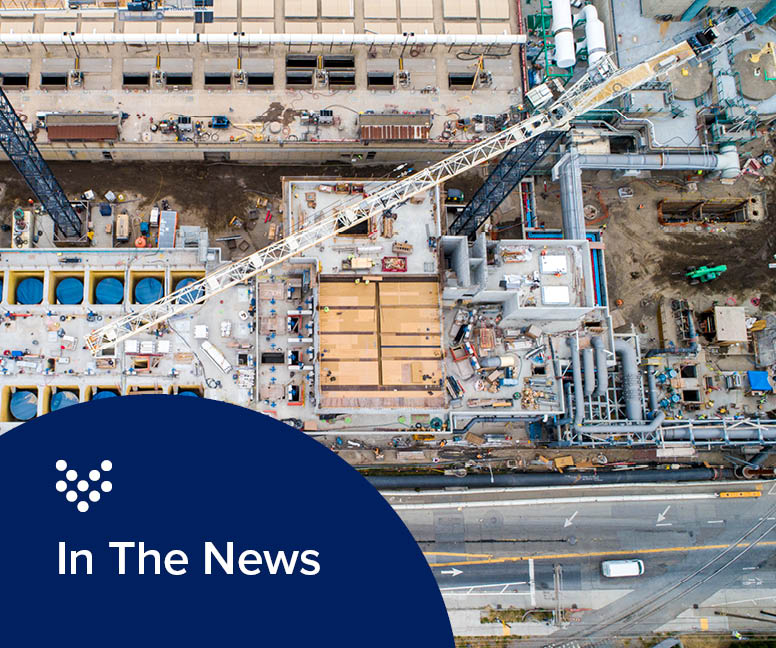
The SEP headworks is boxed in by a four-lane street, active railroad tracks, the plant’s main electrical feed, and operating treatment facilities. With such limited space, the project team faced a fundamental design challenge: How do you build a new, larger facility when there’s no room to expand?
The team’s answer was an innovative, vertical configuration that stacked treatment processes instead of spreading them horizontally. This was more than just creative architecture. It integrated screenings compaction, grit washing, and electrical support facilities into a compact footprint. To execute the vertical design, the team had to re-imagine how headworks facilities could function and carefully coordinate hydraulics, structural systems, and operational access.
The limited footprint presented another important challenge. Any new building on the site would require removing an existing structure, and constructing the headworks without disrupting treatment operations was paramount. The solution was a phased “demo-to-build” approach, first constructing a temporary 100-mgd bypass system, then demolishing the wet weather headworks, and systematically building the new facility without compromising treatment capacity.
The result of the team’s imaginative design and careful collaboration during construction was a new headworks that ultimately freed up space at the plant—an increasingly valuable commodity, as evolving regulations will likely require new future treatment processes.
Even the most careful planning and innovative designs weren’t immune to the massive disruptions during the COVID-19 pandemic. In 2020, with the project already under construction, material costs skyrocketed, supply chains fractured, and the budget swelled $100 million beyond projections. The team faced an existential question: How do you dramatically reduce costs without sacrificing quality, performance, or the project schedule?
The answer required an enormous pivot. Instead of building a new 50-mgd influent pump station, the team completely rehabilitated the existing structure. Though not part of the initial scope, this new approach kept the project within the original budget without sacrificing momentum.
To stay on schedule, the design and construction teams worked in lockstep—using remote collaboration tools to overcome pandemic restrictions—and were able to modify plans even as construction continued.
Without effective capture and removal, grit can severely compromise downstream equipment and processes. But, while most water resource recovery facilities see peak grit loads of 300 to 600 lbs/MG, because of its location and San Francisco’s CSOs, the SEP routinely experiences loads exceeding 6,100 lbs/MG—more than ten times industry norms.
The team ran a year-long, full-scale, 5-mgd pilot study to select the equipment best suited for the design. The pilot evaluated multiple, side-by-side grit separation and washing technologies under actual operating conditions. The results guided selection of a system capable of handling the extreme load requirements. It also efficiently separates organic material from inert grit, resulting in reduced grit disposal volumes.
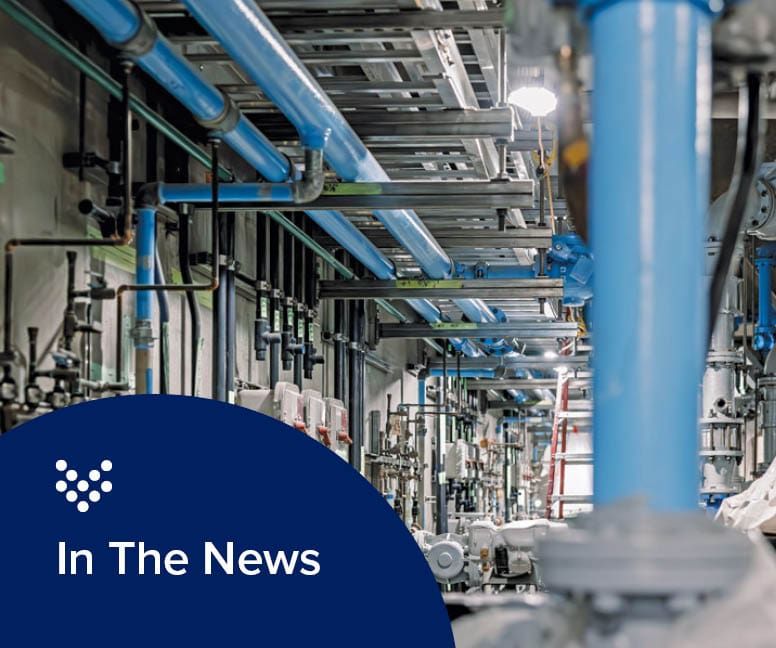
In another display of ingenuity, the design team used hydraulics to optimize the screening process and raise the hydraulic grade line under high-flow conditions. This maintained proper screen velocities with just four screening channels—half the number originally anticipated—saving both space and capital costs while reliably maintaining optimal performance under all flow conditions.
A critical piece of infrastructure in an earthquake-prone region, the new headworks facility had to meet rigorous seismic standards, including the ability to withstand a 7.8 magnitude earthquake. Designing for seismic resilience in the San Francisco Bay Area is challenging enough, but doing so atop “bay mud”—deep, unstable soil near a major fault line—was a major hurdle. An inspired structural design used piers drilled nearly 100 feet deep to provide adequate support.
The existing pump station presented an even thornier problem. Its aging pile foundation fell far short of seismic codes, but replacing it was too costly. The solution was to support the existing structure using a new concrete slab constructed atop the existing structure and supported by 17 drilled piers up to four feet in diameter and 120 feet deep. This approach effectively “hangs” the 50-mgd pump station from the new slab—bringing this critical facility up to code without the cost and disruption of replacement.
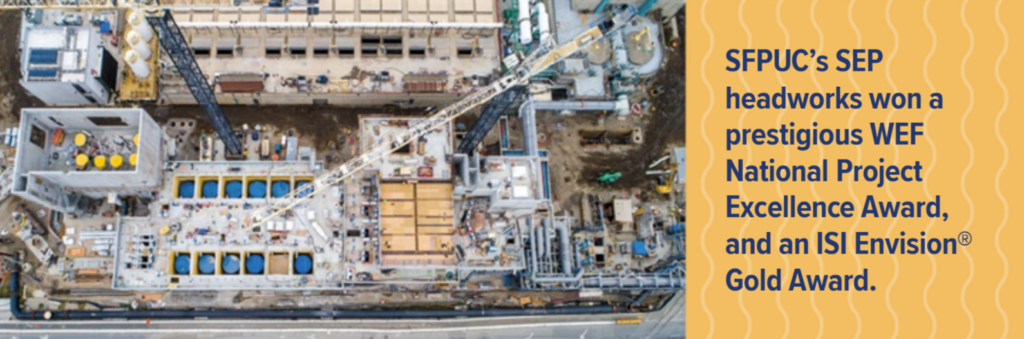
Sometimes overcoming the odds isn’t about having all the answers upfront, but rather tapping creativity and teamwork to find solutions along the way. The SEP headworks team maintained a collaborative partnership, even when circumstances demanded rapid pivots, and delivered a state-of-the-art facility within a limited urban footprint. The project earned a Water Environment Federation (WEF) National Project Excellence Award and an Institute for Sustainable Infrastructure (ISI) Envision® Gold Award—the first headworks nationally to achieve this recognition.