Southeast Treatment Plant Headworks Project
Project Overview
The San Francisco Public Utilities Commission (SFPUC) Southeast Treatment Plant, the oldest and largest wastewater treatment facility in San Francisco, processes 80% of the city’s combined stormwater and wastewater, making it an essential part of the city’s operations. Recognizing the need to safeguard the aging facility against growing risks from earthquakes and sea level rise, SFPUC launched a major effort to modernize the plant in 2015. SFPUC designed this effort to not only protect the health and safety of the city’s residents but also invest in the future of the Bayview community where the plant is situated.
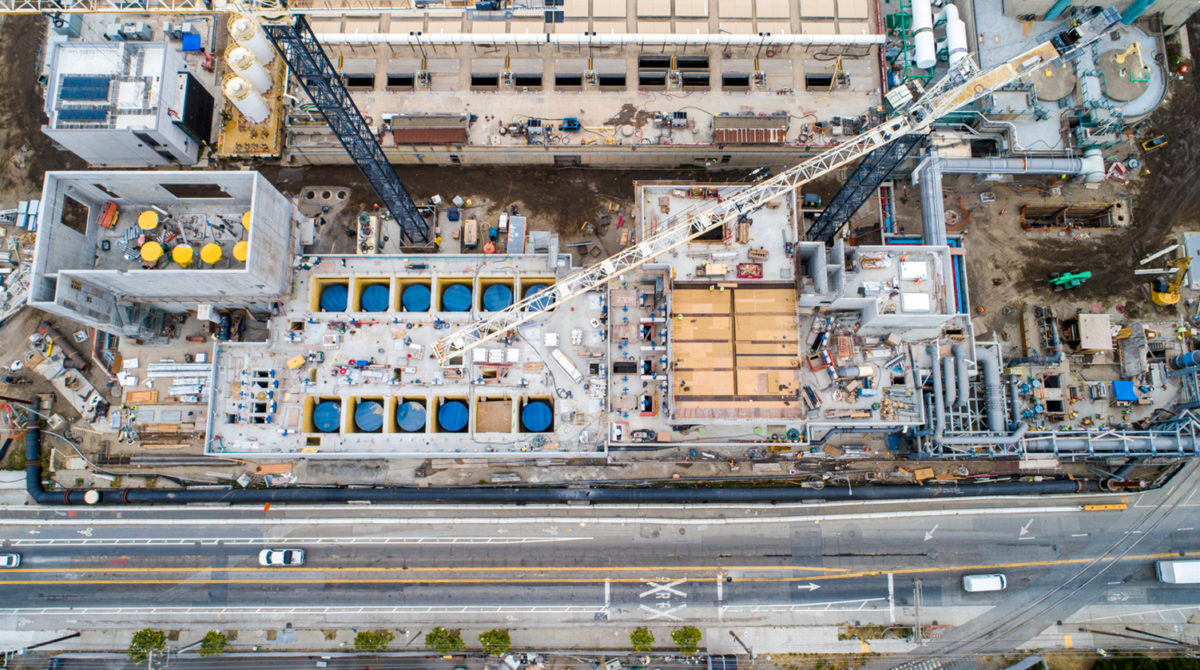
SFPUC selected Carollo Engineers to design a new headworks facility for the plant, a $718 million project that is part of SFPUC’s larger, multibillion-dollar Wastewater Capital Improvement Program. The goal was to replace the two existing aging headworks facilities with one integrated, state-of-the-art headworks facility—all while keeping the plant fully operational.
The project team faced significant technical obstacles: extreme space constraints, seismic resilience requirements, exceptionally high grit loads, and large flow variations. To overcome these challenges, Carollo developed an innovative vertical design that stacked key treatment processes to maximize use of the available space. The team used active hydraulic grade line adjustments in place of additional screen channels, implemented state-of-the-art grit removal technology to handle extreme grit loads efficiently, and optimized the hydraulic processes to reduce energy consumption. Despite COVID-19-related disruptions, the team kept the project on schedule and within budget, achieving $100 million in cost savings to offset COVID-19-related cost increases and keep the project moving forward.
The resulting all-weather, 250-million-gallon-per-day headworks facility, which became operational in August 2024, increases sewer system reliability and efficiency during storm events, protects other critical treatment systems on site, and saves ratepayer dollars. It is built to withstand a 7.8-magnitude earthquake and 36 inches of sea level rise, and it removes grit with 95% efficiency—essentially doubling the efficiency of the previous system. The project has also had a positive impact on the local community; in addition to improving odor control and air quality and incorporating public art, it also employed 614 San Francisco residents, who earned a total of $34 million in wages and benefits.
This innovative facility will enhance the reliability and sustainability of San Franscisco’s wastewater treatment infrastructure for decades to come, serving as a model for sustainable, community-focused wastewater treatment facilities in dense urban environments worldwide.
Results and Highlights

The project replaced two aging headworks with one state-of-the-art facility while keeping the plant operational.
The design overcame extreme space constraints, seismic requirements, exceptionally high grit loads, and large flow variations
An innovative vertical design stacked key treatment processes to maximize use of the available space
The team saved $100 million, enabling the project to move forward despite COVID-related disruptions
Project Awards and Accolades

Institute for Sustainable Infrastructure
Water Environment Federation (WEF)
American Society of Civil Engineers (ASCE)