Andy Baldwin
Digital Water Services - Practice Lead

September 21, 2026





Historically, utility master plans have provided project recommendations and expected short- and long- term capital costs to guide future project prioritization. They also provide defensible justifications for user rates and connection fees. These efforts often result in detailed reports and recommendations that remain static until revisited in the next master plan update.
As modeling tools and data availability continue to advance, many utilities struggle to maximize the utility of collected data and develop effective methods to facilitate nimble decision making.
The evolution of data systems and the technical skill of staff with geographic information systems (GIS), asset management platforms, and decision-making tools provide agencies with the power to leverage a variety of additional objectives during the planning process.
Opportunities include:
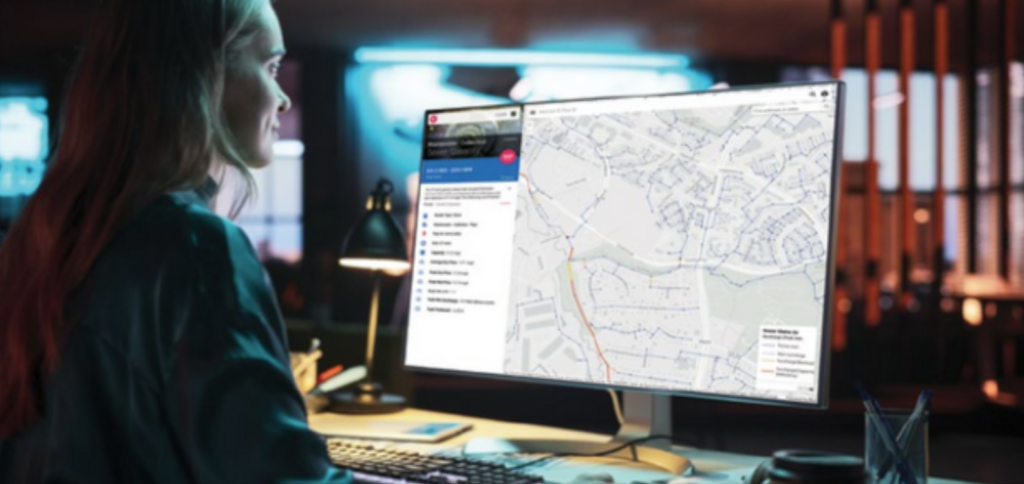
Meeting these needs requires adapting to changing conditions and integrating multiple data sources.
Carollo has developed several digital tools that can dynamically manage CIPs and allow flexible changes in planning assumptions, financial conditions, and development impacts over time. These solutions can be used to modify master plans and provide actionable data long after the planning process is complete.
Here, we explore just a few of the digital tools Carollo has offered utilities to help navigate change by planning and prioritizing infrastructure spending, upgrading or replacing aging facilities, and efficiently managing system growth and development.
One of Carollo’s clients was experiencing rapid growth along the expanded Washington DC regional transit corridor, stressing existing infrastructure and impacting regional utility contractual agreements.
A detailed planning process that considers growth dynamics and system complexity has helped this utility’s staff understand and expand local sewer infrastructure through a web-based GIS app. The tool facilitates viewing model simulation results and provides access to a variety of evaluations, eliminating the need to own and understand how to use existing modeling software and complete time-consuming simulations.
Project owners can now easily track development and its impact on system capacity—allowing rapid responses to developer requests and system model updates that reflect ongoing growth.
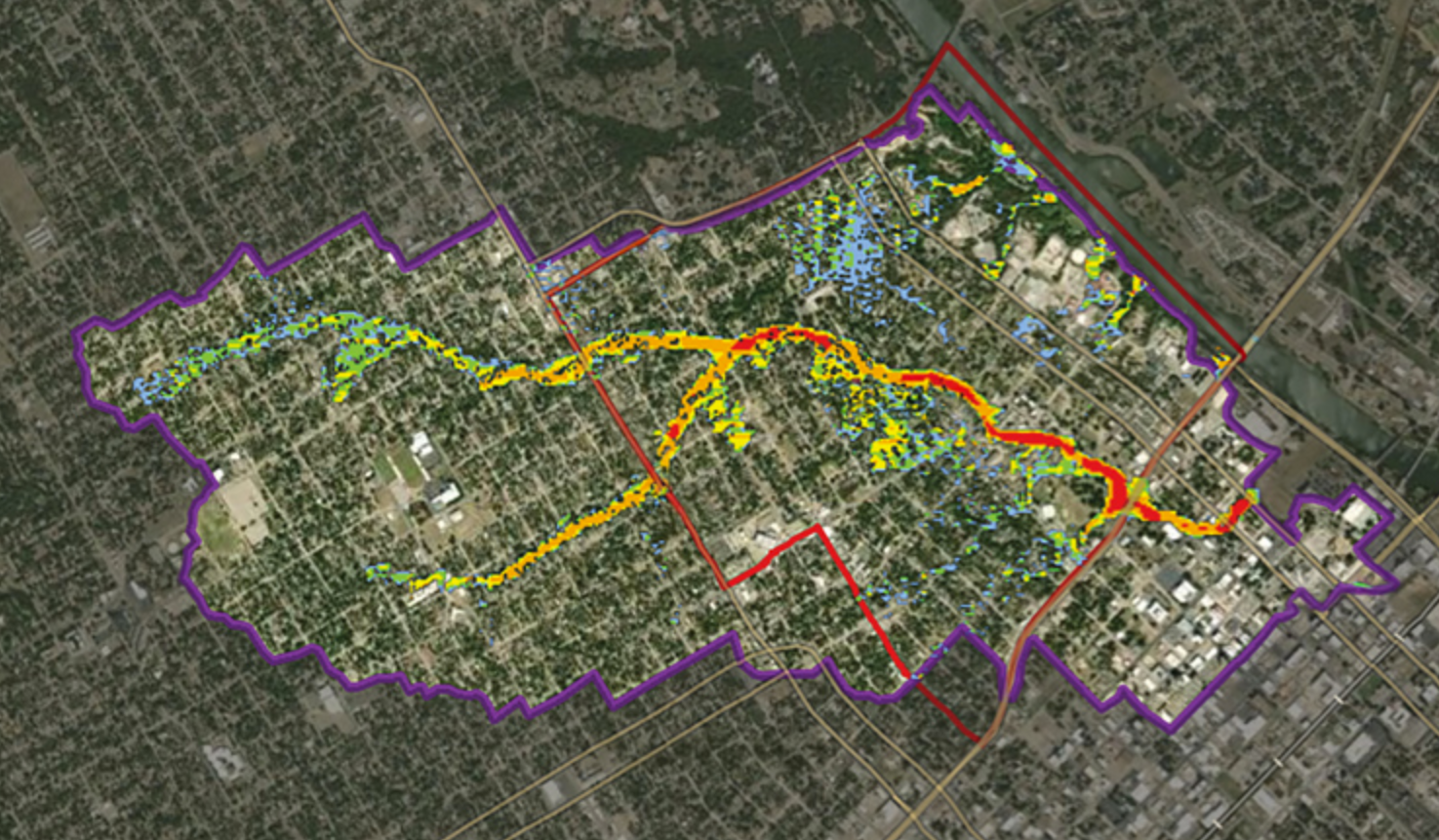
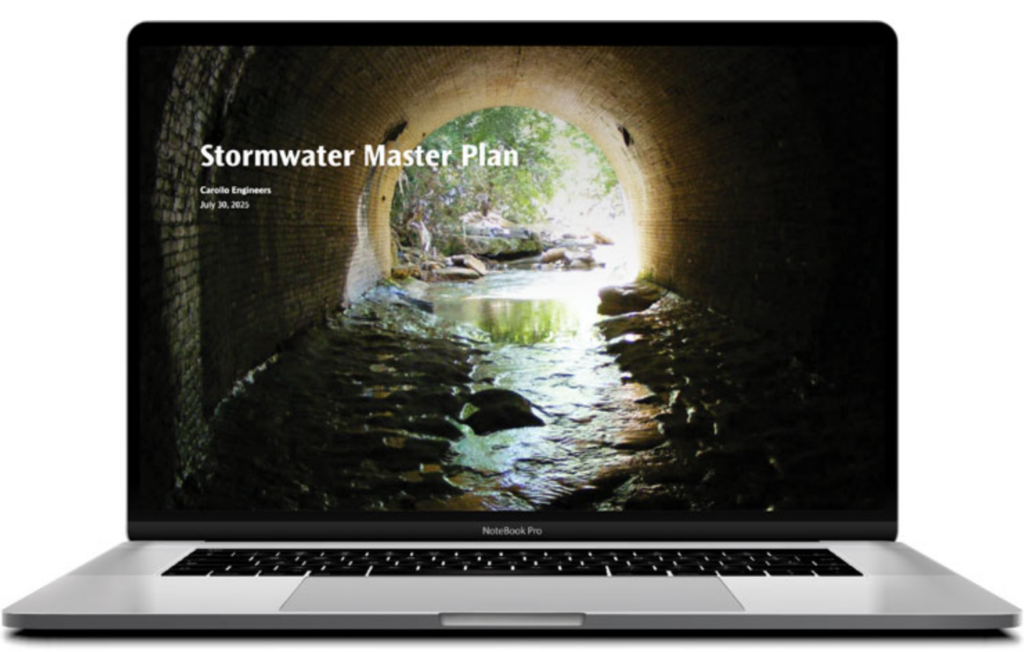
A Texas neighborhood was struggling with chronic nuisance flooding, as well as more severe flooding from larger storm events. The client’s goal was to reduce the overall flood risk in the area through development of a comprehensive stormwater master plan that identifies and prioritizes short- and long-term flood mitigation solutions.
Rather than deliver a standard set of master plan binders and wall maps, Carollo developed an ArcGIS StoryMap to share plan results with stakeholders. StoryMaps are user-friendly, web-based data visualization tools combining geographic maps, photos, videos, and text. They are interactive, can be personalized and accessed on the go, and enable users to share real-time dashboards, identify potential trends, and make timely, informed decisions.
A Carollo client in British Columbia provides water and wastewater services to 13 municipalities and three electoral areas in the southern portion of Vancouver Island and a few surrounding Gulf islands. Its service area includes 460,000 customers and the territories of several First Nations.
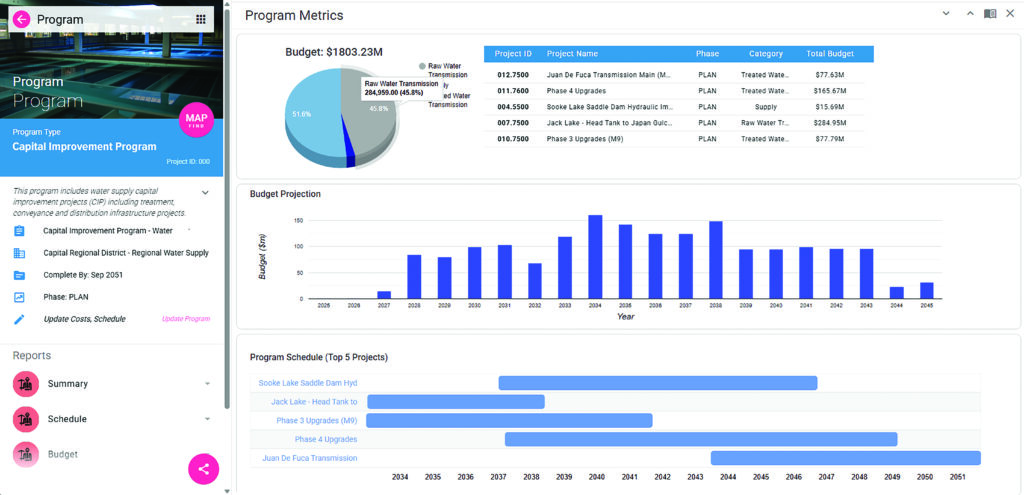
The client’s goal was an easy-to-use method to dynamically track and manage the implementation of its water and wastewater CIP for treatment and conveyance infrastructure. Carollo developed web-based tools that integrate mapping and tabular information to enable visualization of the CIP over time, assess the effect of changes to project timing, and assess and modify capital spending over the CIP’s lifetime.
Digital tools enable more detailed analyses, meaningful stakeholder communication at all levels, improved visualization, and better decision-making. Their continued evolution will strengthen their capabilities and increase their ease of use.
Future developments will likely incorporate AI and machine learning, and move beyond planning support to actively enhance facility design and operations activities.
The principal goal of Carollo’s Digital Water Group is to continue advancing the state of the practice. This will involve helping utilities better understand customer demands and patterns, manage and integrate critical data, and deliver a growing host of smart solutions that help clients save time and money.