
Jennifer Steffens
Digital Water Technical Practice Director

March 19, 2026



Today utilities are collecting more data than ever—from supervisory control and data acquisition (SCADA) systems, geographic information systems (GIS), hydraulic models, and asset management platforms. But in practice, more data does not always lead to more clarity. Digital technologies are often deployed without a clear connection to how utilities actually plan, operate, and respond. Information exists across multiple platforms, requires specialized expertise to interpret, or arrives too late to support day‑to‑day decisions. Too often, digital water initiatives fall short.
The challenges driving this gap are familiar: aging infrastructure, increasing regulatory expectations, workforce transitions, and rising operational complexity. The tools exist. What’s often missing is an approach that connects them to the decisions utilities actually need to make.
Digital water succeeds when it starts with engineering. Water systems are physical, regulated, and risk-sensitive. Models must reflect how systems actually operate. Analytics must account for hydraulic reality. And the outputs must be usable by the people responsible for performance and compliance. That is why digital solutions should begin with the problem the utility is trying to solve, whether that is optimizing treatment, improving asset management, or gaining better visibility across a complex system. The digital tools come after the engineering foundation is in place.
When technology is treated as the goal instead, digital initiatives tend to stall. Dashboards may be built and data integrated, but organizations still struggle to answer basic questions: What is happening right now? What is likely to happen next? What should we do about it? An engineering-led approach keeps the focus on outcomes, not tools.
CarolloDIGITAL begins every solution with the utility’s operational context and decision-making needs, not a technology
platform. Digital tools can then be applied throughout the life of its systems, from long-range planning and asset risk evaluation to real-time operations.
The focus is on helping utilities make better planning, investment, and operational decisions with the information they already have. The result is a more connected view of system performance and risk—where decisions in one area inform and strengthen the others.
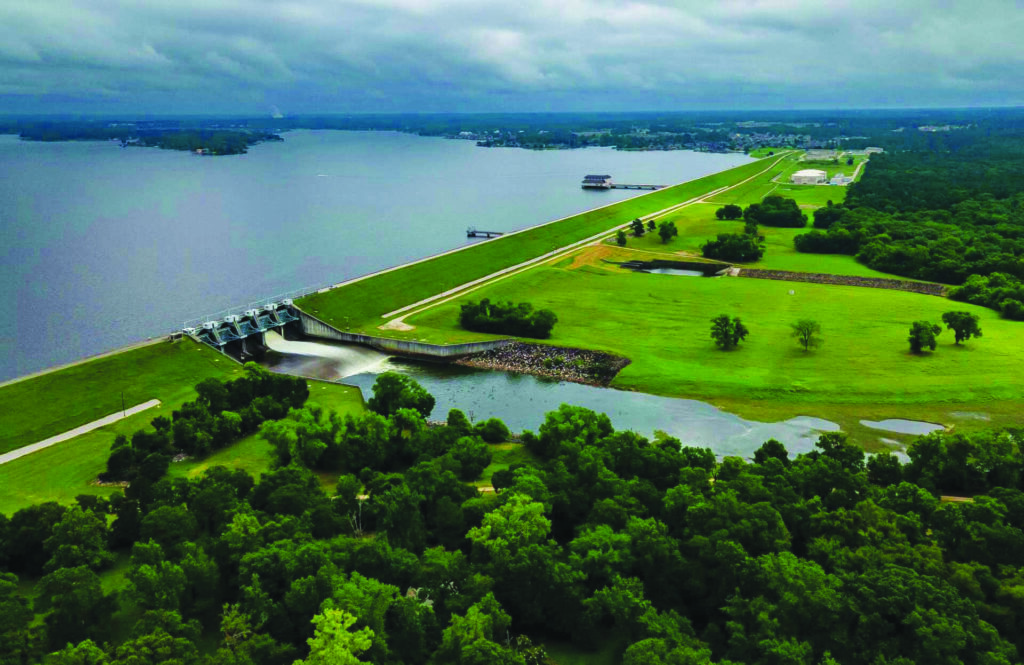
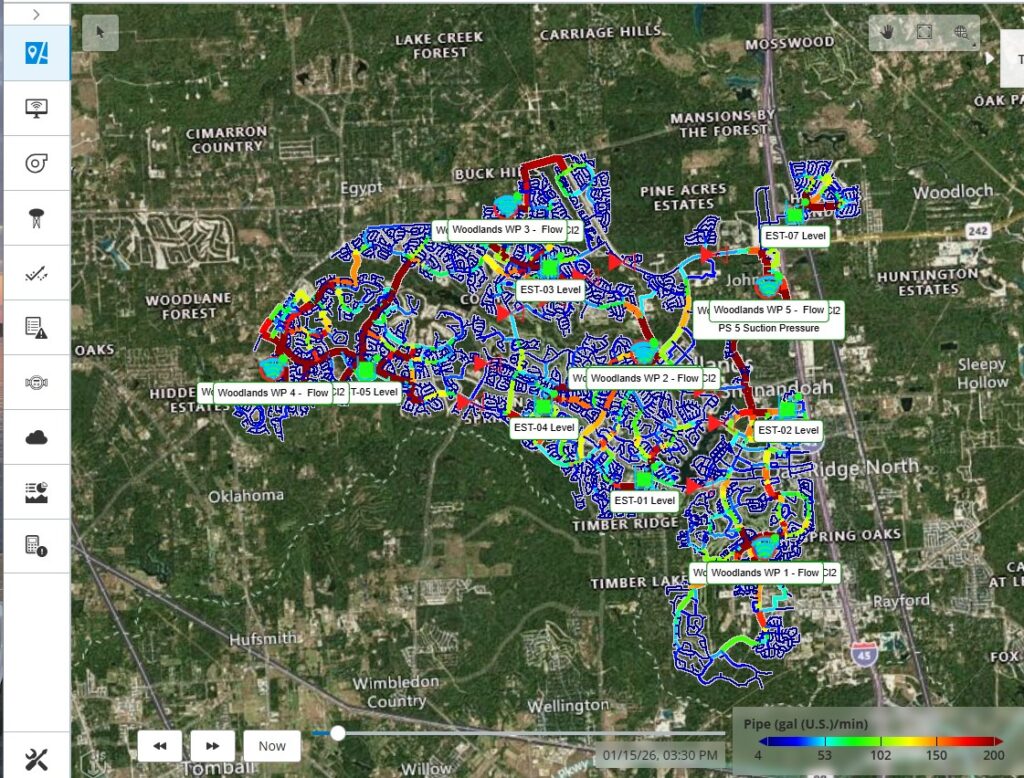
The San Jacinto River Authority (SJRA) operates a large, complex water distribution system that includes five treatment plants, six elevated storage tanks, and dozens of sensors throughout the network.
At this scale, it’s difficult to maintain real-time situational awareness through traditional monitoring alone. Staff needed earlier warnings of anomalies like pipe breaks and water quality issues, as well as access to hydraulic and asset information, without having to navigate multiple specialized systems.
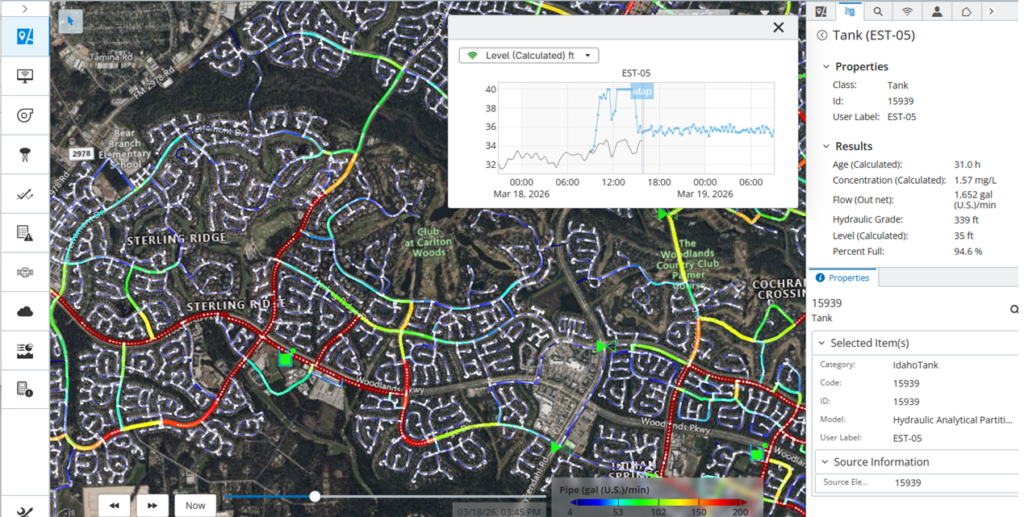
Carollo built the foundational elements to make data accessible to a digital twin for SJRA. This digital twin integrates hydraulic modeling, GIS asset data, and real-time SCADA information into a single environment. Near-real-time sensor readings (flows, pressures, chlorine residuals, pump operations, and storage levels) are pulled every 15 minutes and dynamically linked into the platform. Further, the digital twin’s users include both operators and other SJRA staff, adding to the platform’s versatility.
At the core of the system is a continuous comparison between measured sensor data and modeled system behavior. When a deviation between the two exceeds defined thresholds, operators are alerted to potential upset conditions, such as pipe breaks, earlier than traditional monitoring would allow.
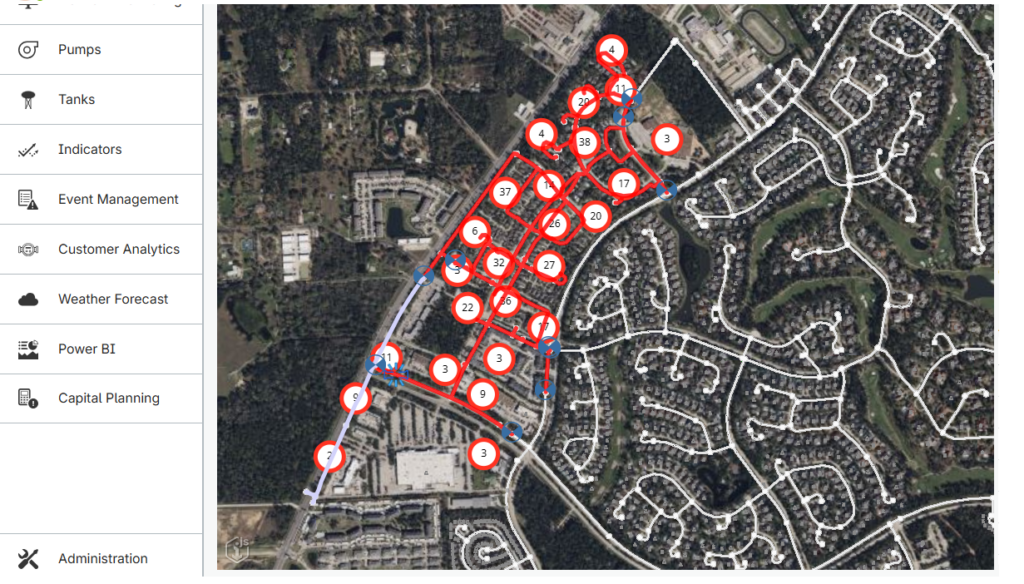
The platform also models chlorine residual concentrations across the distribution network, enabling staff to identify areas where levels may trend toward unacceptable conditions before a water quality issue develops.
The digital twin’s development focused on usability. Through web-based dashboards, users can view key system information without relying on specialized modeling tools or switching between multiple platforms.
The digital twin aligns system operation with how staff works and makes decisions—giving SJRA a practical tool that supports continuous monitoring, predictive analysis, and data‑driven decision‑making, not only for day‑to‑day operations, but also for longer‑term planning and engineering evaluations.