Shawn Corrigan
Resilience & Sustainability Technical Practice Director

May 15, 2026


Operational resilience is the ability to mitigate, prepare for, react to, and recover from unexpected events with minimal impact to normal operations. It’s becoming increasingly important, especially as hazards become more prevalent, costly, and likely to stem from supply chain disruptions or staffing constraints. However, resilience isn’t achieved through a single project or investment. Instead, it is the culmination of many coordinated decisions across planning, engineering, operations, and leadership.

If you’re among the thousands of utilities in the United States that serve more than 3,300 people, you’ve not only completed a risk and resilience assessment (RRA) and an emergency response plan (ERP), but you’ve also recertified (or are recertifying) those plans. These are important steps. It’s one way that your utility has identified risks and vulnerabilities and has developed a plan to respond to emergencies. It’s important, though, to treat this compliance as a milestone, not a destination.
What follows is a practical roadmap for reaching the next goalpost on the road to resilience, no matter where your utility is starting from.
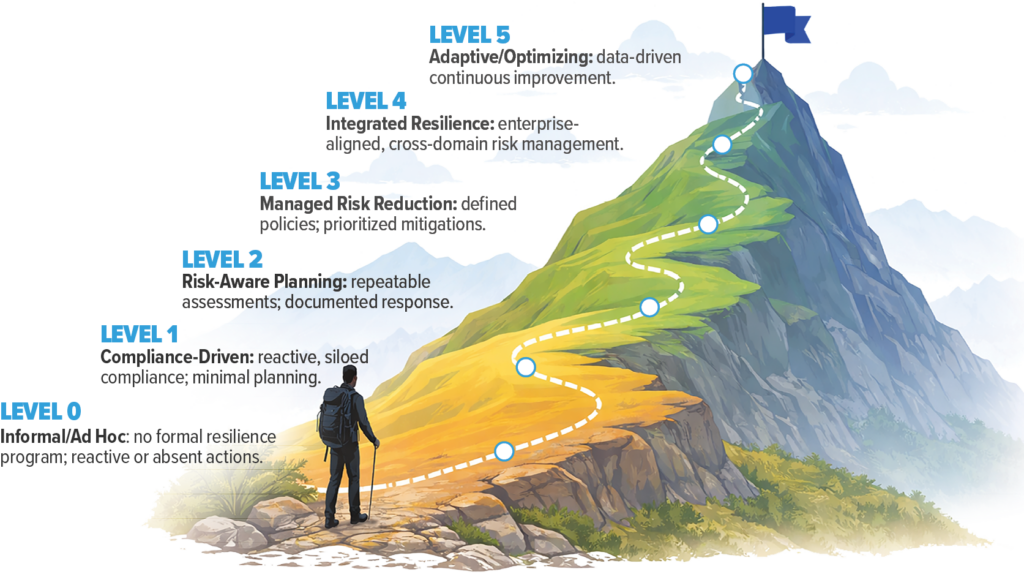
This guide uses a resilience maturity model, which recognizes that resilience develops gradually. Growth on this path can be categorized into stages.
Utilities move through these stages as they build on their previous work. The maturity model focuses on how consistently utilities incorporate resilience across different levels of decision-making, rather than simply measuring how many planning or compliance projects they have completed.
Your utility is probably already on the path to resilience. Regulatory drivers like America’s Water Infrastructure Act (AWIA) have compelled drinking water utilities to prepare and certify RRAs and ERPs that identify hazards such as flooding, cyber intrusions, and seismic events. While wastewater utilities are not yet governed by AWIA, they are often driven by state regulations, discharge permit conditions, or local emergency planning requirements to develop strong operational awareness. Other risk, resilience, and sustainability projects, like asset management assessments, climate adaptation studies, and hazard and operability studies, are also important contributors.
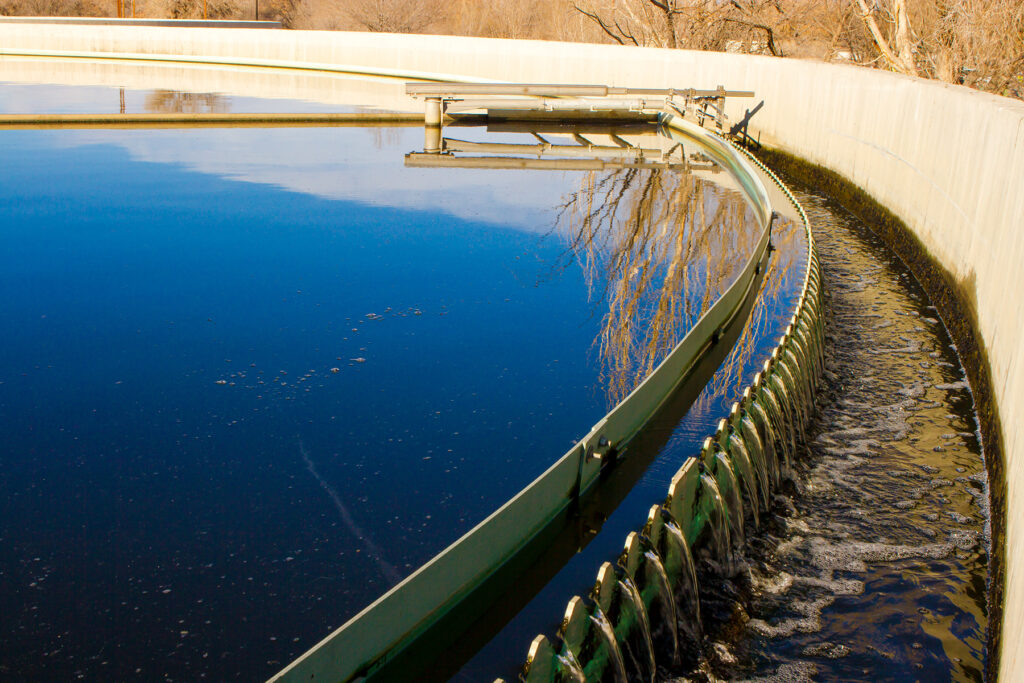
This means that regulated drinking water utilities and many wastewater utilities have reached at least the early resilience stage, and many have reached higher levels of maturity.
Your utility doesn’t have to climb mountains to become more resilient. Achievable steps might look like:
The more actions you take, the more preparedness becomes ingrained in your culture and decision-making. These steps allow your utility to scale the mountain of resilience one step at a time.